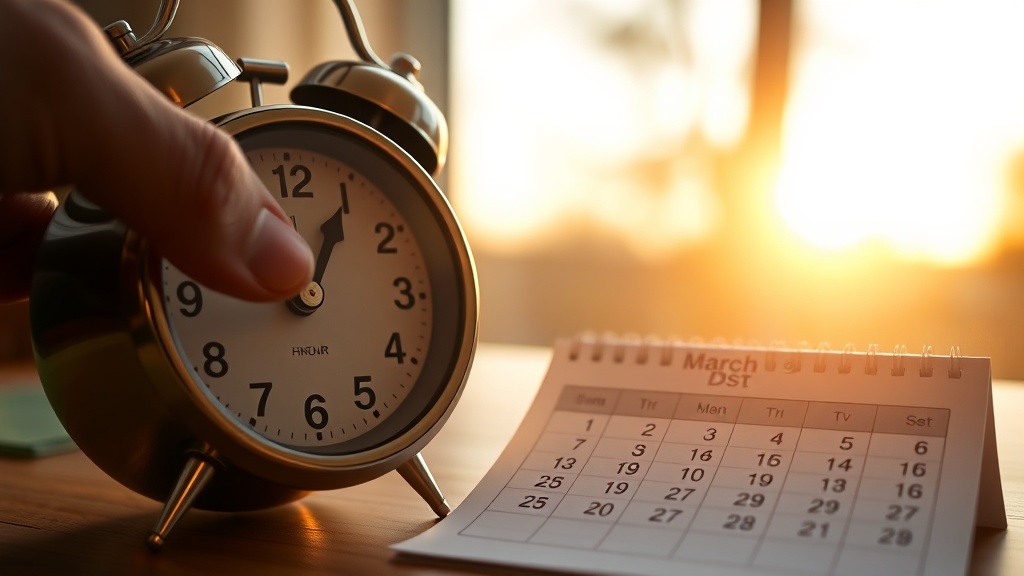
Daylight Saving Time Reset: Expert Tips to Align Your Circadian Rhythm and Boost Spring Energy

Hook
Ever felt like the world jumped an hour ahead while you stayed stuck in yesterday’s sleep schedule? That “spring‑forward” jolt can sap your focus, mood, and even your heart health—unless you give your internal clock a quick reset.
Context
Daylight Saving Time (DST) kicked in on March 8, 2026. The hour we lose may seem small, but research shows it disrupts our circadian rhythm, spikes stress hormones, and can increase heart‑attack risk in the first few days ¹. The good news? A handful of science‑backed tweaks can smooth the transition, let you harvest spring’s extra daylight, and keep your productivity high.
What is the circadian rhythm and why does DST throw it off?
Your circadian rhythm is the 24‑hour internal clock that governs sleep‑wake cycles, hormone release, body temperature, and metabolism. It’s primarily synced by light exposure. When the clock jumps forward, melatonin production—your sleep‑inducing hormone—gets out of sync, making it harder to fall asleep at night and wake up refreshed in the morning ².
How can I use light exposure to jump‑start my body clock?
- Morning sunlight within 30 minutes of waking — Aim for at least 15 minutes of direct sunlight (or a bright light box at 10,000 lux) to suppress melatonin and cue your brain that it’s daytime.
- Avoid blue‑light screens after 8 p.m. — Blue wavelengths trick your eyes into thinking it’s still daylight. Use “night mode” or a blue‑light filter on devices.
- Evening dim lighting — Warm, low‑intensity lights signal the approach of night and help melatonin rise naturally.
What gradual schedule shifts work best?
Instead of a sudden one‑hour jump, phase the change over 3‑4 days:
| Day | Wake‑up time | Bedtime |
|---|---|---|
| 1 | +15 min | +15 min |
| 2 | +30 min | +30 min |
| 3 | +45 min | +45 min |
| 4 | +60 min | +60 min |
This incremental approach reduces sleep debt and gives your hormone cycles time to adapt.
Which nutrition tweaks support a smoother transition?
- Stay hydrated — Dehydration amplifies fatigue. Aim for 2 L of water a day, especially after morning coffee.
- Limit caffeine after 2 p.m. — Caffeine can linger up to 6 hours, pushing your sleep window later.
- Add magnesium‑rich foods (spinach, pumpkin seeds, almonds) in the evening; magnesium promotes relaxation and improves sleep quality ³.
- Eat a light, protein‑focused dinner — Heavy, fatty meals delay digestion and can keep you up longer.
How can I boost spring energy once my clock is back on track?
- Schedule “power‑hour” workouts in the late morning when cortisol peaks — a brisk walk or 20‑minute HIIT session spikes alertness.
- Take a 10‑minute “nature break” after lunch. Exposure to fresh air and natural light combats the post‑meal slump.
- Plan a “spring‑reset” activity — gardening, a bike ride, or a weekend hike. Physical movement in daylight reinforces the new light‑dark cycle.
What common pitfalls should I avoid?
- Staying in bed longer — Sleeping in after the shift adds to sleep inertia. Get up at your new wake‑time, even if you feel groggy.
- Skipping breakfast — A balanced breakfast (protein + complex carbs) jump‑starts metabolism and stabilizes blood sugar.
- Relying on alcohol to unwind — Alcohol suppresses REM sleep, leaving you more tired the next day.
Takeaway
DST doesn’t have to feel like a penalty. By tuning light exposure, phasing your schedule, and tweaking nutrition, you can reset your circadian rhythm in under a week and ride the spring surge of daylight with clear focus and steady energy.
Related Reading
- Bio‑Harmony Eating Patterns: Align Your Meals with Your Body’s Clock — Dive deeper into how meal timing dovetails with sleep cycles.
- Spring Refresh: Embrace Bio‑Harmony for a Balanced Lifestyle — A broader look at seasonal wellness habits that complement DST adjustments.
- Mindful St. Patrick’s Day: Wellness Tips for a Healthy Celebration — Quick, low‑stress tips to keep your energy high during spring holidays.
Sources
- American Heart Association, Daylight Saving Time and Heart Health (2024) — https://newsroom.heart.org/news/heres-your-wake-up-call-daylight-saving-time-may-impact-your-heart-health
- National Geographic, How Daylight Saving Time Affects Your Body (2024) — https://www.nationalgeographic.com/health/article/daylight-savings-heart-health
- NIH PubMed, Magnesium and Sleep Quality (2023) — https://pmc.ncbi.nlm.nih.gov/articles/PMC4189320/
{
  "meta": {
    "faqs": [
      {
        "question": "Why does daylight saving time affect my heart health?",
        "answer": "The one‑hour shift disrupts circadian rhythms, raising stress hormones that can trigger cardiovascular events, especially in people with existing heart conditions."
      },
      {
        "question": "How much sunlight do I need each morning to reset my clock?",
        "answer": "Aim for at least 15 minutes of direct sunlight (or 10,000 lux from a light box) within 30 minutes of waking."
      },
      {
        "question": "Can magnesium really improve my sleep after DST?",
        "answer": "Yes—magnesium supports the nervous system and helps regulate melatonin, making it easier to fall asleep after the clock change."
      }
    ]
  }
}